"Our People, Our Stories": Lessons on Chosen Family from LGBTQ+ Youth
Julian Iwasko ‘26, PRYDE Scholar
Photography by Margaret Tsai and Galib Braschler
When I joined the PRYDE Scholars program in 2024, I wasn’t entirely sure what “translational research” looked like in practice. I knew I cared deeply about LGBTQ+ youth and wanted my work to have a tangible impact beyond the research lab, but I hadn’t yet found a bridge between research and community engagement. However, that bridge turned out to be The PRIDE Lab and, unexpectedly, a multi-city art and storytelling project on LGBTQ+ chosen family.
As a research assistant in the Promoting Resilience and Identities DEvelopment (PRIDE) Lab, I support the PRISM Study, a longitudinal community-engaged project examining LGBTQ+ adolescents’ identity development, resilience, social support, and mental health. The study looks at factors that shape young people’s lives, such as microaggressions, social media, and chosen family. Chosen families are those outside of the biological family unit that we choose to build close, supportive relationships with, often as replacements or supplements to our families of origin. The idea to study chosen family came directly from our community partners who work closely with LGBTQ+ youth experiencing family rejection, housing instability, and a lack of support. They told us that chosen family was not only important, but foundational to the experiences of the LGBTQ+ youth they support.
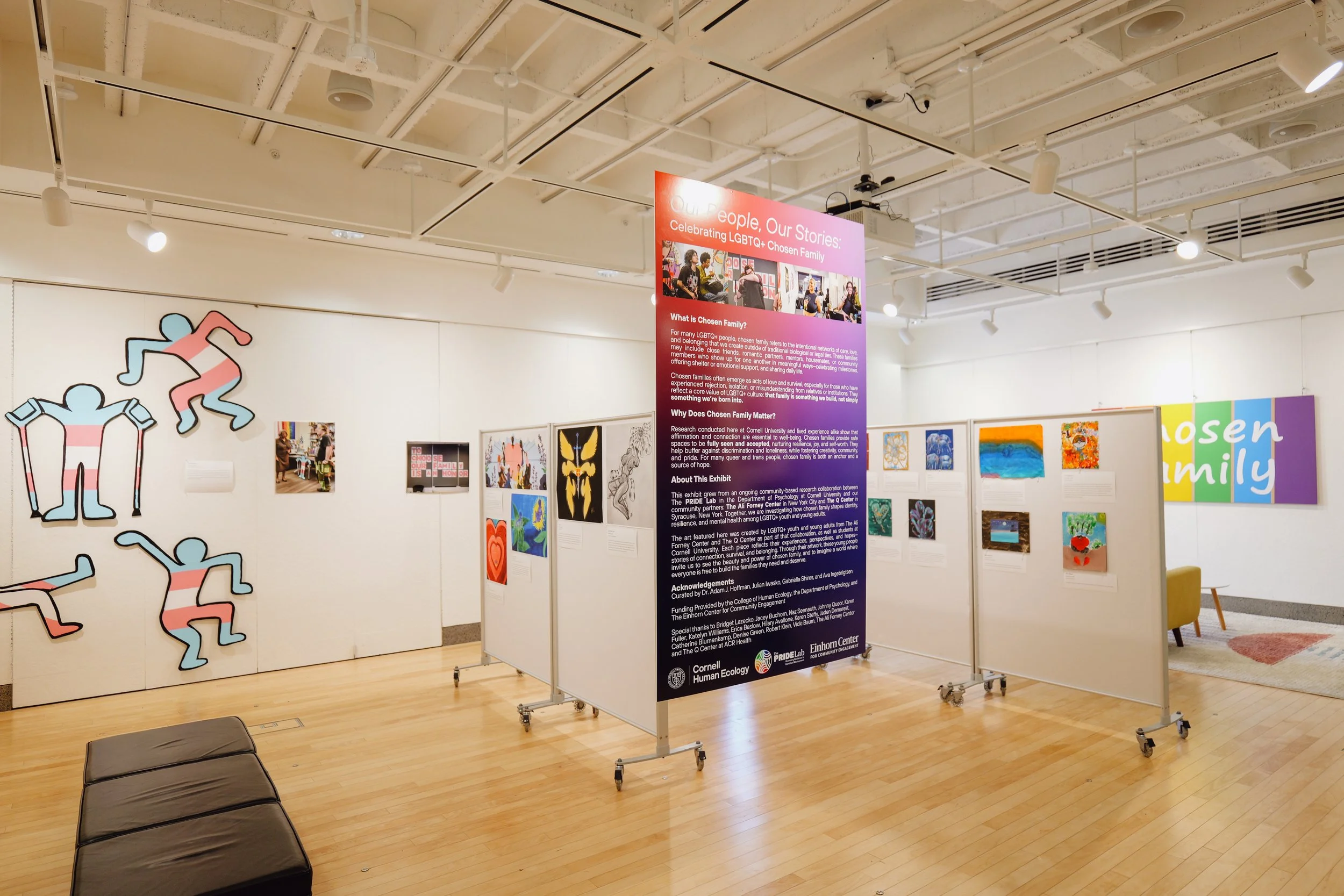
“Our People, Our Stories” exhibit in Martha Van Rensselaer Hall
In July, I began working with our two community partner organizations: The Ali Forney Center in New York City and The Q Center in Syracuse. Both serve LGBTQ+ youth and young adults, many of whom rely on their chosen families for survival, affirmation, and belonging. Together, we imagined an event where young people could express what chosen family means to them, not in a survey or interview, but through art and storytelling. Several Zoom meetings later, we had solidified plans to invite the youth at both centers to create art in any medium reflecting their experiences with chosen family, followed by a celebratory event where they could share these pieces with their communities. We called it, “Our People, Our Stories: A Night Celebrating LGBTQ+ Chosen Family.”
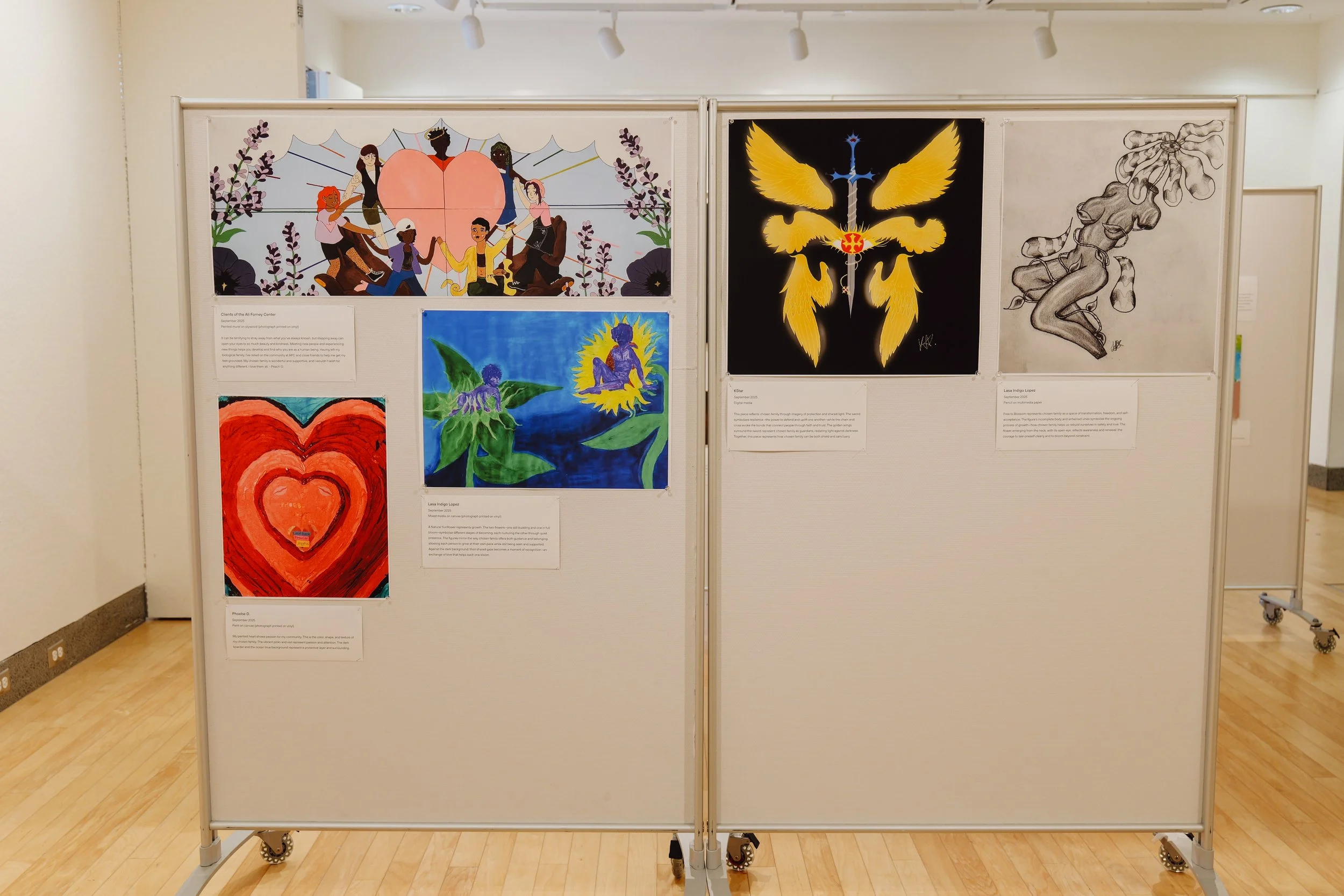
By September, I traveled to Manhattan to help host the first event at The Ali Forney Center. Walking into their conference room that evening, which had been transformed into a gallery of drawings, paintings, poems, and photography, I was immediately struck by the emotion, vulnerability, and creativity of the youth who contributed. Later that month, our team traveled to Syracuse to recreate the same event at The Q Center. Similarly, their cozy lounge space was transformed into an art gallery of colorful canvases, miniature sculptures, and deeply powerful poetry. Both evenings, we gathered around one another as youth shared their stories of chosen family—finding connections in extended family, friends, peers, and the communities at The Ali Forney and Q Centers. Their stories reflected identity, emotion, memory, love, grief, and most importantly, resilience.
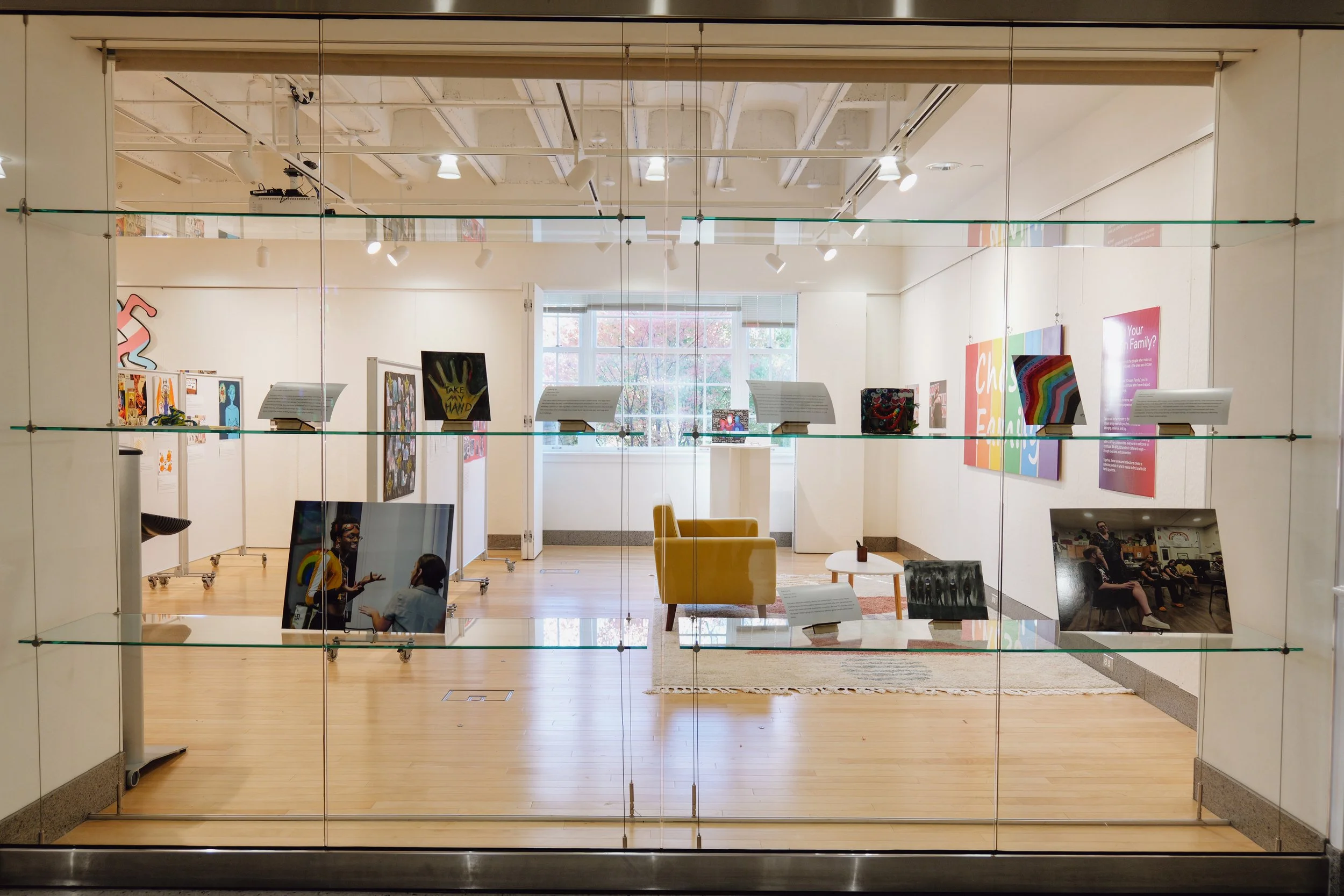
After these events, we brought the art pieces to Cornell and displayed them in an exhibit at Martha Van Rensselaer Hall as the first Cornell art exhibit curated by a Psychology research team. The exhibit was both a celebration of LGBTQ+ chosen family and queer resilience and a direct extension of The PRIDE Lab’s commitment to community-based research. During the exhibit’s opening ceremony, I shared with attendees that this work came from a simple truth I learned from these youth: family is not just something we’re born into, but something we consciously build, protect, and nurture. For many LGBTQ+ people, chosen family is not a “backup” family—it’s a lifeline that provides survival, joy, and belonging. Chosen family is the people we choose, and the ones who choose us back.
Meeting and hearing directly from these youth made it clear to me that they are not simply research participants; they are artists, storytellers, collaborators, knowledge-holders, and resilient members of chosen families. Academic research often focuses on theories, measures, and outcomes, but this project reminded me that research is about real relationships, real experiences, and real lives. The vulnerability and creativity of these youth deepened our understanding of chosen family far beyond what any data point could capture.
This experience fundamentally changed how I think about what research can and should be. It taught me that community partnerships are essential to ensure our research reflects the real needs and real strengths of the communities we work with. It also taught me that translational research is collaborative and builds something meaningful with the communities we serve, not just studying them from afar. Above all, this experience showed me that young people are truly the experts of their own experiences, and their voices should guide our research just as much as we study them. Their stories don’t just inform the PRISM Study; they illuminate it.
I am deeply grateful to Dr. Hoffman and The PRIDE Lab team for their mentorship and guidance, The PRYDE Scholars program for providing the opportunity to travel and engage in this project, The Ali Forney Center and The Q Center for their life-changing work supporting trans and queer young people, and most importantly, the resilient LGBTQ+ youth who continue to show up every day for themselves and their chosen families.